Course Description
About the Course
Abhijith Electronic Solution offers practical, industry-oriented training in Very Large Scale Integration (VLSI) Design and Verification using Verilog Hardware Description Language (HDL).
This course introduces learners to digital electronics, combinational and sequential circuit design, RTL development, simulation, functional verification, and synthesis fundamentals. Participants will learn to describe digital hardware using Verilog, verify design behaviour using testbenches, and understand the workflow from RTL coding to FPGA implementation.
The program combines theoretical concepts with hands-on simulation exercises and digital design projects to build a foundation for careers in VLSI design, RTL development, and digital verification.
Key Learning Outcomes
- Understand digital logic and semiconductor design fundamentals.
- Develop combinational and sequential circuits using Verilog HDL.
- Write synthesizable RTL code.
- Create testbenches and verify functional behavior.
- Use waveform simulation and debugging tools.
- Understand synthesis, timing constraints, and static timing analysis fundamentals.
- Explore FPGA implementation and hardware testing.
Why Choose Abhijith Electronic Solution?
- Practical RTL coding and simulation exercises.
- Industry-oriented digital design workflows.
- Hands-on verification and debugging.
- Mini-projects and technical documentation.
- Internship guidance and customized college training.
- Corporate training aligned with relevant engineering practices.
Who Can Join?
B.E./B.Tech students, polytechnic students, graduates, and aspiring VLSI design or verification engineers.
What You'll Learn
Module 1: Digital Electronics Fundamentals
- Number systems and binary arithmetic.
- Logic gates and Boolean algebra.
- Combinational circuits: multiplexers, decoders, and adders.
- Sequential circuits: flip-flops, counters, and registers.
- Finite State Machine (FSM) fundamentals.
Module 2: Introduction to VLSI Design
- Semiconductor and integrated circuit fundamentals.
- ASIC and FPGA design flows.
- RTL design and verification workflows.
- Introduction to front-end and back-end VLSI concepts.
Module 3: Verilog HDL Programming
- Verilog syntax, modules, and ports.
- Data types, operators, and expressions.
- Continuous assignments and procedural blocks.
- Blocking and non-blocking assignments.
- Combinational and sequential RTL coding.
- Synthesizable coding practices.
Module 4: RTL Design
- Arithmetic and logical circuit implementation.
- Multiplexers, counters, and shift registers.
- Clock dividers and sequence detectors.
- FSM design using Verilog.
- Parameterized modules and reusable RTL.
Module 5: Simulation and Functional Verification
- Testbench development.
- Clock and reset generation.
- Stimulus generation and output checking.
- Functional simulation and waveform analysis.
- Debugging RTL design errors.
- Basic assertion-based checking concepts.
Module 6: Synthesis and Timing Fundamentals
- RTL synthesis concepts.
- Gate-level netlist introduction.
- Area, power, and performance fundamentals.
- Setup time, hold time, and clock constraints.
- Static Timing Analysis (STA) fundamentals.
Module 7: FPGA Implementation
- Introduction to FPGA architecture.
- FPGA development tools and project setup.
- Pin assignment and constraint files.
- Synthesis, implementation, and bitstream generation.
- Programming and testing supported FPGA boards.
Module 8: Hands-on Projects
- ALU design using Verilog.
- FIFO or counter implementation.
- FSM-based controller design.
- RTL simulation and testbench verification.
- FPGA-based digital system demonstration, where hardware is available.
Requirements
- - Laptop or desktop computer.
- - Access to Verilog-compatible simulation tools.
- - HDL development environment such as Vivado, Quartus Prime, or an appropriate open-source toolchain.
- - FPGA development board for optional hardware implementation.
- - Willingness to complete RTL coding, simulation, and verification exercises.
Prerequisites
- - Basic digital electronics knowledge is recommended.
- - Basic computer programming concepts are helpful.
- - Familiarity with Boolean algebra is beneficial.
- - No previous Verilog or VLSI experience is required for beginner-level batches.
- - Suitable for electronics, electrical, and related engineering students and graduates.
Student Reviews & Feedback
Verified reviews submitted by students who attended this course.
No Student Reviews Yet for This Course
Verified reviews from enrolled students will appear here in real time.
Share This Course
Related Courses
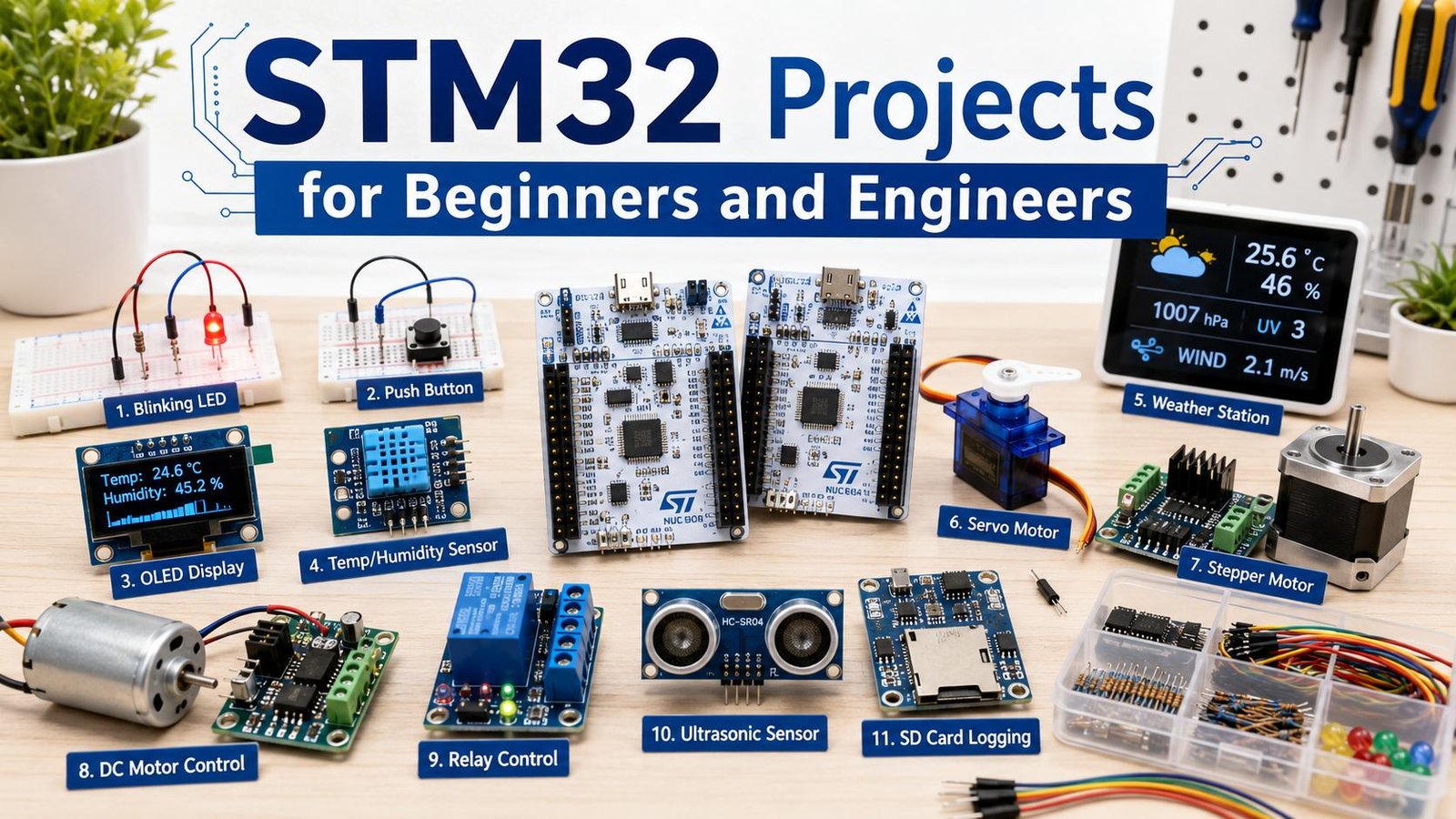
STM32 Microcontroller Programming and Embedded Systems Development
Master STM32 microcontroller programming using Embedded C, STM32CubeIDE, STM32Cu...
30 days
20 seats left
View Details

Automotive Electronics and CAN Bus Communication
Learn automotive electronic systems, ECU architecture, CAN and LIN communication...
30 days
20 seats left
View Details
Robotics & Autonomous Vehicle Prototyping
Practical robotics course covering chassis dynamics, motor drivers, sensor fusio...
30 days
15 seats left
View Details